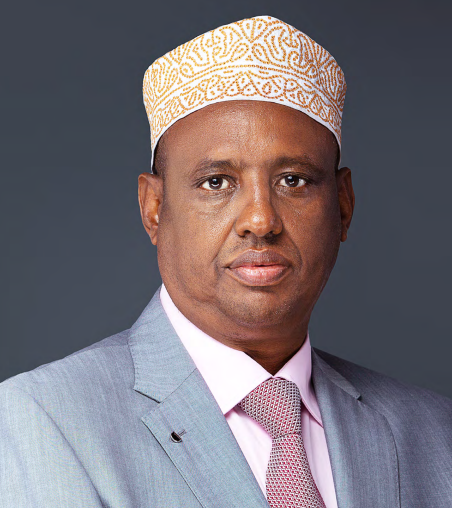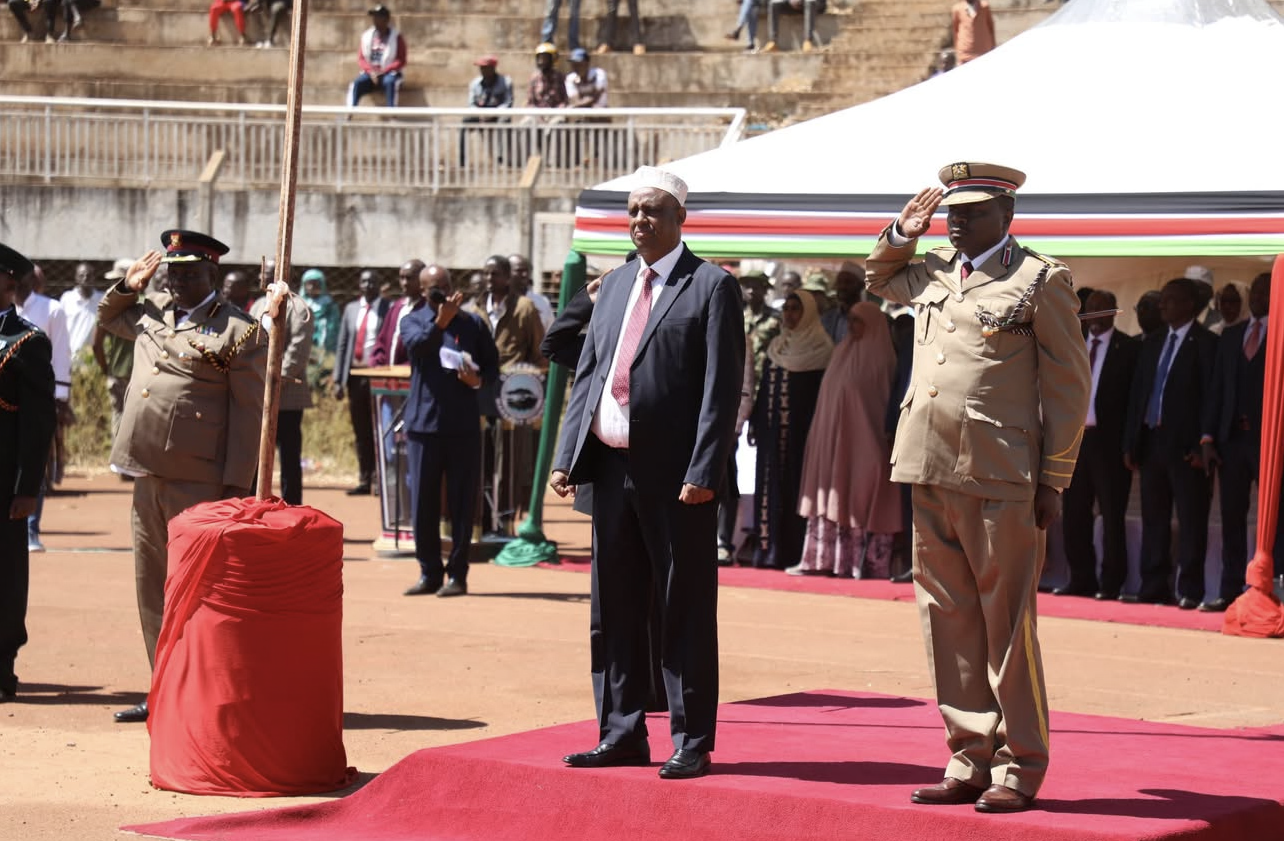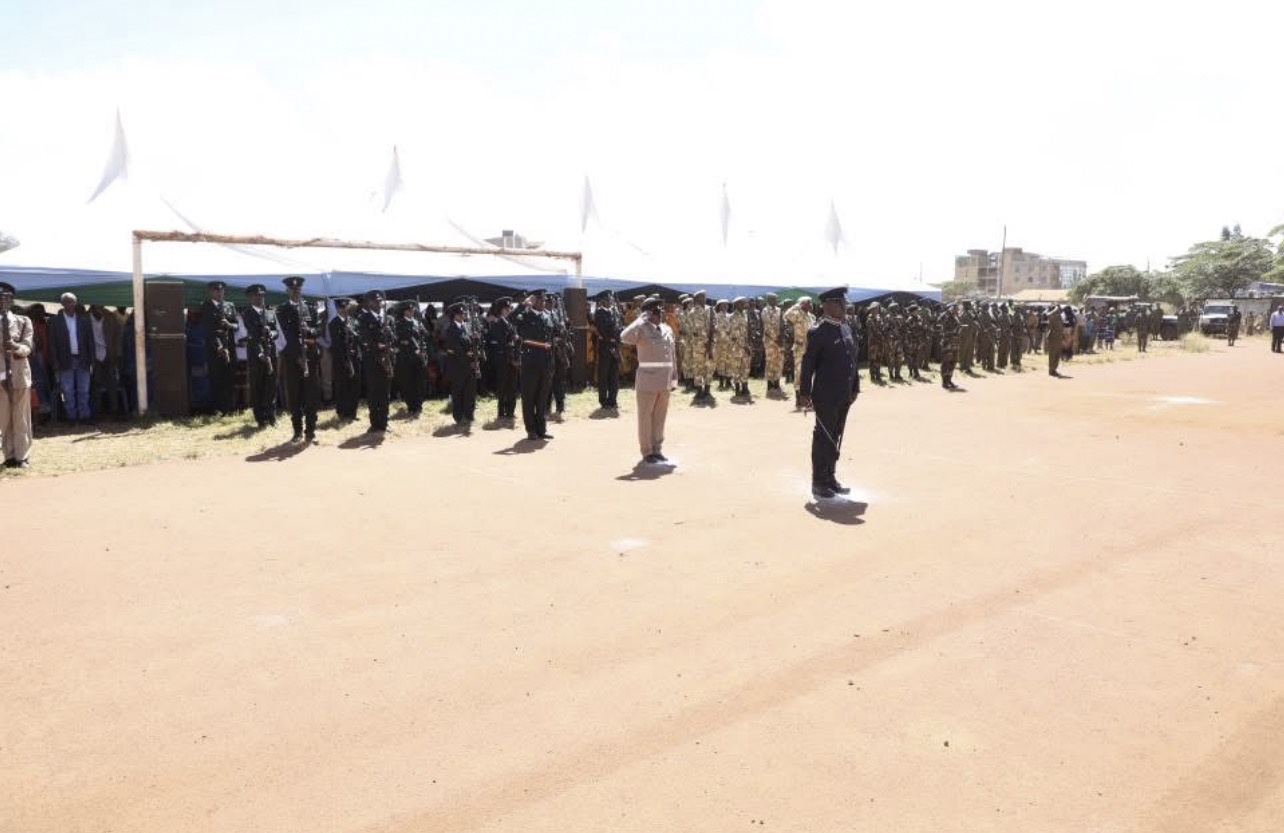
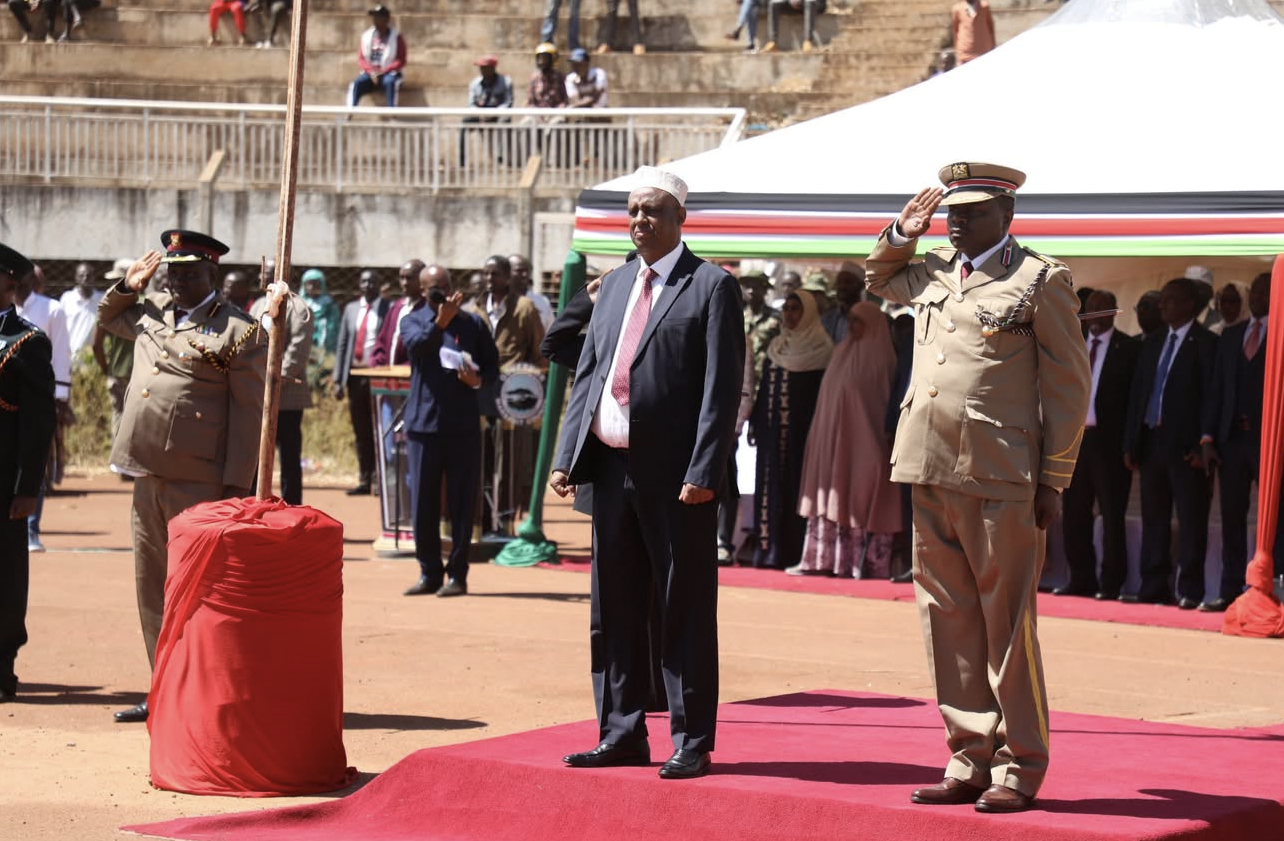
DURING THE 63RD MADARAKA DAY CELEBRATIONS
WANANCHI WATUKUFU WA MARSABIT,
Today, the 1st of June, we gather as Kenyans to mark one of the most sacred days in the history of our Republic — Madaraka Day.
This year, we commemorate the 63rd Madaraka Day, a solemn and proud reminder of the moment when Kenya assumed the right, dignity and responsibility of self-government. On this day in 1963, our country crossed a historic threshold. After years of colonial domination, struggle and sacrifice, the people of Kenya regained the authority to govern themselves, shape their own destiny, and take their rightful place among the free nations of the world.
Madaraka Day is therefore not just a ceremony. It is a national covenant. It reminds us that freedom was not handed to us casually. It was won through courage, pain, endurance and sacrifice. It calls upon every generation to ask itself one important question: are we using the freedom we inherited to build a better Kenya and a more dignified life for our people?
Today, we remember with deep gratitude the gallant men and women who fought for Kenya’s liberation. We honour those who faced detention, exile, dispossession, bullets, imprisonment and even death so that we could live as a free people. They carried the burden of freedom before us, and they secured for us the priceless gift of nationhood.
We thank the Almighty God, who has watched over our nation throughout the last sixty-three years. Kenya has passed through moments of trial and triumph, but by God’s grace, by the resilience of her people, and by the wisdom of leadership across generations, our nation has remained stable, hopeful and forward-looking.
On this day, we also honour the founding fathers and mothers of our Republic, and all those who have held the responsibility of leadership since independence. From the founding President, the late Mzee Jomo Kenyatta, to His Excellency President Dr William Samoei Ruto, each of the five Presidents of our Republic has contributed, in his own time and circumstances, to the continuity, stability, democracy and progress of Kenya.
We equally pay tribute to the heroes and heroines of Kenya’s Second Liberation. Their courage expanded our democratic space, strengthened the voice of the citizen, and gave us the 2010 Constitution — one of the most progressive constitutional orders in the world. That Constitution deepened our rights, strengthened public participation, and gave life to devolution.
For counties such as Marsabit, devolution was not merely a change in administrative structure. It was a turning point. It brought government closer to the people, gave our communities a stronger voice in deciding their priorities, and created a framework through which resources, planning and responsibility could reach places that had waited for far too long at the margins of national development.
That is why, as we celebrate Madaraka Day, we must also account for the promise of devolution. Freedom must be felt in people’s lives. It must be seen in a road that connects a village to a market; in a health facility that saves a mother; in a water point that sustains families and livestock; in a title process that secures land rights; in a training centre that gives a young person a skill; in a modern market that dignifies trade; in an industrial facility that adds value to local production; and in climate-resilient investments that protect our communities from drought, floods and uncertainty.
Fellow citizens,
Over the past year, your County Government has continued to focus on the foundations that matter most to the people of Marsabit: roads, health, water, food security, livestock livelihoods, land security, clean and planned towns, enterprise development, education, youth skills, sports, and resilience against climate change.
In road infrastructure, we have made significant progress in opening up our vast county and strengthening the movement of people, goods and services. Through the ASAL Rural Roads Programme, implemented in partnership with the European Union and the French Development Agency, Marsabit is undertaking gravel-engineered roads with proper drainage structures to improve access, durability and resilience against harsh weather.
The first 10 kilometres of the Logologo–Korr Road have been completed, while the next 30 kilometres towards Korr are under implementation. Works are also progressing on the Manyatta Jillo–Gororukesa corridor in Saku, the Sololo Town–Mado Adhi–Waye Gotha Road in Moyale, and the North Horr–Dukana Road. These are not ordinary roads; they are lifelines for trade, security, health access, education and social connection in a county where distance has often been one of the greatest barriers to development.
We are also raising the standard of our strategic roads. The 13-kilometre Sololo–Anona–Golole–Uran Road has been launched for upgrading to Low Volume Seal bitumen standard. In Saku, the key Marsabit urban corridor from Old Slaughter House through Marsabit Market, Dakabaricha, Kiwanja Ndege, War Cemetery and Gof Hotel Junction is being prepared for tarmac upgrading. Altogether, these strategic road investments are valued at more than KSh 1.5 billion and will ease movement, lower the cost of doing business, support emergency response and improve access to markets and services.
We also know that the recent heavy rains damaged sections of our road network. In response, the Department of Roads has undertaken a road inventory and condition survey to identify and prioritise the most affected routes. Nyayo Road in Central Ward has already been prioritised, and other critical roads are being addressed through ward priority projects and maintenance programmes.
In health, we have continued to strengthen both infrastructure and service delivery. The completion of Sololo Level IV Hospital is a major milestone in expanding access to higher-level care in Moyale and the wider northern corridor. We have also advanced a health development programme of more than KSh 201 million, covering facility improvements, equipment, laboratory support, maternity services, staff housing, solarization, water connections, fencing, incinerators and other essential medical infrastructure across many wards.
At Marsabit County Teaching and Referral Hospital, dialysis services have remained operational, helping patients manage renal conditions closer to home and reducing the burden of costly referrals. We are also advancing investments in diagnostic equipment, blood bank strengthening, cancer-care support equipment and renal services.
Across the county, facilities such as Loglogo, Kamotonyi, Kurungu, Moyale Level IV maternity, Balesa Saru, El Boru Magado, Aibete, Boru Haro, Songa, Karare and others are benefiting from ongoing improvement, equipping or operationalization support.
Beyond buildings, we are also strengthening prevention and community-level care. Through partnership between the County Government and the National Ministry of Health, 1,983 Community Health Volunteers have been placed on stipends. Vaccine distribution has reached 121 health facilities with all required antigens, while blood donation drives have collected about 3,000 pints to support transfusion services. Maternal and perinatal death audits, disease surveillance, One Health sensitization, malaria case management training, food safety inspections, school health inspections and public health radio programmes have also been implemented.
These interventions show that we are not only treating illness; we are building a county health system that prevents disease, responds early, protects mothers and children, and serves people closer to their homes.
Ladies and Gentlemen,
In water, agriculture and pastoral livelihoods, we have continued to invest in the productive base of our county. Marsabit is an arid and semi-arid county, and for us, water is not a routine service. It is life. It sustains households, livestock, farming, schools, health facilities and local economies.
Over the past year, we have drilled and equipped boreholes, constructed water pans, supported water supply schemes, extended pipelines, rehabilitated shallow wells, promoted household water harvesting, solarized water systems and strengthened water infrastructure for both domestic and livestock use. Interventions such as Bakuli IV, Qolbot, Badan Rero, Kishwein, Karare, Sesala, Sololo flood mitigation and several borehole and pipeline projects demonstrate our commitment to reducing the burden of water scarcity across the county.
In agriculture, livestock and fisheries, we have treated food security not as a slogan, but as a practical development agenda. We have supported farmer producer organizations and SACCOs so that farmers and pastoralists can aggregate produce, access markets, improve bargaining power and increase household income. Particular focus has been placed on our priority value chains: milk, meat, fish, honey and beans.
We have expanded extension services through agricultural extension officers, an agricultural engineer and agripreneurs, and developed key policy instruments including the Agriculture Sector Strategy, Food Security and Nutrition Policy, Youth Agripreneurship Policy and Rangeland Management Policy.
Livestock remains the backbone of our county economy. We have therefore continued to support livestock health, vaccination, rangeland management, market development and value addition. More than 15 livestock markets have been developed or improved, strengthening trade and supporting pastoral livelihoods.
We have also expanded irrigation and climate-smart agriculture in areas such as Lataka, Dokatu, Kalacha, Bura, Songa and Kubi Qalo. Through drought-tolerant seeds, fruit tree seedlings, agroforestry, farm ponds, kitchen gardening and water conservation technologies, we are helping households produce food even under difficult climatic conditions.
In trade and enterprise development, we are taking deliberate steps to move Marsabit from a county that mainly exports raw products to a county that increasingly processes, packages and benefits from the value of what it produces.
At Odda, we are advancing the development of an Industrial Park that will support processing, packaging, cold storage and light manufacturing, especially in livestock, dairy, hides and skins, and agro-products. This is important because our people should not remain at the lowest end of the value chain. The pastoralist who produces livestock, the farmer who produces food, the trader who moves goods, and the young person seeking employment must all benefit from a stronger local economy.
At Sessi, we are developing a Modern Market to provide traders, producers and consumers with a more orderly, hygienic and secure trading environment. Together, the Odda Industrial Park and the Sessi Modern Market represent a practical economic chain: producers need efficient markets, traders need decent trading spaces, processors need reliable facilities, young people need jobs, investors need confidence, and the county needs a stronger revenue base to reinvest in roads, water, health, education and other services.
This is Madaraka expressed through economic self-reliance.
In climate change adaptation and environmental resilience, we have strengthened community-led climate action across all 20 wards. Through the County Climate Change Fund, supported by the County Government and the Financing Locally-Led Climate Action Programme, communities are identifying and prioritising climate investments based on their own local risks and needs.
The current climate resilience package includes water pans, boreholes in water-stressed areas, desilting of water pans, livestock breed improvement and restocking, support to women and youth groups in apiculture, mini-irrigation schemes, tree planting and land restoration. These interventions will improve access to water, restore degraded land, diversify livelihoods, protect livestock-based incomes, strengthen food security and cushion our people against the growing effects of climate change.
Fellow County Men and Women,
In land, energy, housing and urban development, we have continued to lay the foundation for orderly growth, investment and secure land rights. Land is not only a resource; it is identity, security, heritage and opportunity. When land is planned, surveyed and protected, it reduces conflict, encourages investment and gives communities confidence about the future.
We have completed 18 Local Physical Development Plans to guide the orderly growth of our towns. We have completed surveys in nine towns as an important step towards the titling of approximately 10,000 parcels. In partnership with development partners, we have commenced community land registration processes in 11 wards to protect community land rights and reduce future conflict.
We have also commenced the County Spatial Plan, which will provide the broader land-use and development blueprint for Marsabit. In our urban centres and trading centres, we have strengthened solid waste management in 11 centres. The operationalization of Moyale Municipality is another important milestone, strengthening structured urban management in a strategic border town with enormous potential for trade, movement and regional integration.
In the energy sector, we have finalized the sector plan and policy to better attract and manage investment, including ongoing interest in wind power opportunities in the Loyangalani and North Horr areas. Our county is blessed with enormous renewable energy potential, and we must position Marsabit to benefit from clean energy investment in a manner that supports our people, our economy and our environment.
Fellow citizens,
In education, skills development, youth empowerment and sports, we have continued to invest in the foundation of human capital. The future of Marsabit will not be built by infrastructure alone. It will be built by educated children, skilled youth, empowered girls, responsible citizens and productive communities.
At the Early Childhood Development Education level, we have sustained the ECDE feeding programme, which is currently supporting 21,710 young learners across the county throughout the school year. In a county where drought, migration and household vulnerability can easily affect attendance and retention, this programme is not merely about meals. It is about keeping children in school, supporting nutrition and giving every child a fairer start in life.
We have strengthened ECDE staffing by recruiting 82 new ECDE teachers and posting qualified staff to 83 centres that previously lacked teachers. We have also supported teacher professional development and distributed ECDE instructional materials in selected wards.
We are also embracing digital learning from the earliest years. Through the digital programme we embraced, 19,205 ECDE learners are now benefiting from digital learning support, while more than 520 teachers are implementing digital learning methodology. With digital lesson guides, learning devices, story books and continued support to teachers, Marsabit is ensuring that even children in rural and remote areas are not left behind in the digital age.
Beyond ECDE, we have continued to support learners through the Marsabit County Education Fund. With an allocation of KSh 201 million, the fund is supporting needy and deserving students in secondary schools and trainees in Vocational Training Centres. Already, KSh 100 million has been disbursed in two tranches, helping learners at critical stages of their education to remain in school and complete their studies with dignity.
Our seven Vocational Training Centres have received support in infrastructure, tools and equipment, while ICT has been integrated into all seven centres. Through partnerships with KCB Foundation, Mercy Corps, NAWIRI, Safaricom Foundation and other partners, hundreds of young people have been supported with vocational skills, apprenticeship opportunities and, in some cases, start-up support.
We have also supported youth economic empowerment through the distribution of 15 motorcycles in Loiyangalani, start-up kits for youth groups in Marsabit Central Ward, and capacity-building programmes in North Horr covering entrepreneurship, leadership, digital opportunities and civic engagement.
These interventions may appear small when viewed one by one, but to the young person who receives a tool, a motorcycle, training or mentorship, they can become the beginning of a livelihood. They can be the difference between idleness and enterprise, between frustration and dignity, between waiting for opportunity and creating one.
We have also supported the empowerment and mentorship of girls through the Girls’ Camp, a visionary initiative conceived and led by Her Excellency the First Lady of Marsabit County. The programme brought together young girls from different parts of the county for mentorship in life skills, health awareness, entrepreneurship, leadership and STEM-related career guidance. This is an investment in confidence. It tells our girls that their dreams matter, that their education matters, and that Marsabit County believes in their future.
In sports development, we have continued to support talent, discipline, cohesion and positive youth engagement. The Girls Football League and Training Camp at Moi Girls brought together teams from all four sub-counties, while the County-Wide Football League continues to strengthen grassroots talent identification, community cohesion and positive youth engagement across the county.
Great People of Marsabit,
The achievements I have highlighted today do not mean that every challenge has been solved. We know that many roads still require improvement. We know that water demand remains high. We know that our health facilities still need more equipment, staffing and reliable support. We know that drought and migration continue to affect school attendance and household stability. We know that our traders and producers need better market access. We know that our young people need more opportunities. We know that climate change continues to test the resilience of our communities.
But we also know that Marsabit is moving — perhaps not as fast as we would wish, but steadily, surely, and one step at a time.
We are connecting communities. We are treating more patients closer to home. We are expanding access to water. We are strengthening the pastoral economy. We are supporting food production. We are protecting land rights. We are planning our towns better. We are opening new spaces for enterprise. We are feeding young learners. We are strengthening ECDE. We are expanding digital learning. We are supporting needy students. We are equipping young people with skills. We are nurturing sports talent. We are empowering girls. We are building resilience against drought, floods and climate shocks.
This is the meaning of Madaraka in our time: freedom translated into service; self-government expressed through dignity; devolution measured by practical progress in the lives of ordinary people.
But Ladies and Gentlemen, all these gains can only endure where there is peace. Development cannot take root where communities are divided, where fear replaces trust, or where politics is allowed to poison neighbourliness.
Marsabit is a county of many communities, faiths, languages, cultures and livelihoods. This diversity is not our weakness; it is our strength. For generations, our people have shared grazing fields, water points, markets, towns, schools, roads and places of worship. We must protect this heritage of coexistence with wisdom, restraint and responsibility.
I call upon all our communities to remain united and peaceful. No disagreement is greater than the peace of our county. No political interest is more important than the safety of our people. No ambition is worth the destruction of the harmony we have worked so hard to build.
I especially call upon all Marsabit leaders at all levels to continue working together for the good of Marsabit. Leadership is a trust, not a weapon. Competition is part of democracy, but division is not leadership. We may belong to different parties, support different candidates and hold different views, but Marsabit must always remain bigger than our personal interests.
As the 2027 campaign begins to gather momentum, I urge all political aspirants and their supporters to conduct themselves with maturity, discipline and respect. Let us compete through ideas, programmes, character and service — not through insults, hatred, fear, clan mobilisation or incitement. The people of Marsabit deserve politics that unites, not politics that wounds; politics that builds, not politics that destroys.
To our youth, I speak to you directly. You are the strength, energy and future of this county. Do not allow anyone to use you to disrupt peace, threaten others or spread hatred for short-term political expediency. Your future is too valuable to be traded for the ambitions of others.
And to the people of Marsabit, I urge you to remain vigilant as citizens. Listen carefully to those who seek leadership. Judge them by their record, their ideas, their respect for all communities, their commitment to peace, and their ability to bring people together. Do not reward those who divide you. Do not follow those who excite anger but offer no solutions. Democracy gives power to the people, and that power must be exercised with wisdom.
We must remember that the progress we are making can only be protected in an atmosphere of peace. Let us therefore guard the peace of Marsabit as our most precious development asset. Let us reject hatred before it grows. Let us correct misinformation before it spreads. Let us choose dialogue over confrontation, unity over division, and the future of our county over the politics of the moment.
As your Governor, I remain committed to leading a county government that listens, plans, delivers and accounts. I know the journey ahead is still long. I know the needs of our people are many. I know expectations are high, and rightly so. But I also know that with unity, patience, discipline and shared responsibility, Marsabit will continue to rise.
Finally, let us celebrate this Madaraka Day with gratitude for the freedom we inherited, with pride in the progress we are making, and with renewed determination to build a more peaceful, prosperous, inclusive and resilient Marsabit County.
May God bless Marsabit County.
May God bless the Republic of Kenya.
Happy Madaraka Day to us all!
Asanteni sana.
H.E. Gov Mohamud Mohamed Ali, EGH
Governor
Marsabit County